We’re coming in strong today with an observation some will disagree with.
Many business teams – and let’s be honest, their leaders – aren’t struggling because people lack ability or effort. They’re struggling because being together simply takes more work than it used to.
We’re all carrying more mental load than we realize. Days filled switching between home and work, tasks and tabs, or notifications and emails leave us feeling depleted and our powers of attention fragmented.
To be present, aware and focused takes energy. First you have to notice that you’re not paying attention, and go from there. Right?
When this kind of overload becomes the norm, the social skills that support teamwork can start to fade a little — the ease of reading the room, the confidence to contribute without overthinking (or being distracted), the ability to settle into a natural, comfortable rhythm with colleagues. These are practised behaviours.
And we’ve noticed in dozens of conversations with clients that teams aren’t getting the practice they used to.
Hybrid work improved flexibility, but dented social skills
Clearly hybrid ways of working brought welcome benefits. More control over our time, working environment, noise levels, location and more.
But hybrid or working from home also reduces the amount of unstructured, low-pressure interaction teams once relied on. The relaxed water-cooler conversations. The quick coffee break where you get a chance to say a friendly hello to a new colleague or even bumping into someone in the car-park when you’ve been trying to catch them all day in between meetings.
Many of these micro behaviors form the social glue of a strong company culture. So, what fills the void when they’re not available?
And is this why some teams feel slightly out of sync — not dysfunctional, just less familiar with the rhythms of working, face to face and side by side?
Why team building still matters
The value of team building today isn’t about offering a “fun break” from work. It’s about giving people the space to reset the way they relate to each other; even trust each other.
When your staff aren’t rushing, when phones are down, when they’re interacting without a deliverable attached, something shifts. Not dramatically, but just enough to create a sense of ease that full-on workdays rarely allow.
And music tends to accelerate this. Shared rhythm has a calming effect. It reduces social tension and supports connection in a very short time. Author Jill Suttie explains, “There’s little question that humans are wired for music. Researchers recently discovered that we have a dedicated part of our brain for processing music, supporting the theory that it has a special, important function in our lives.”
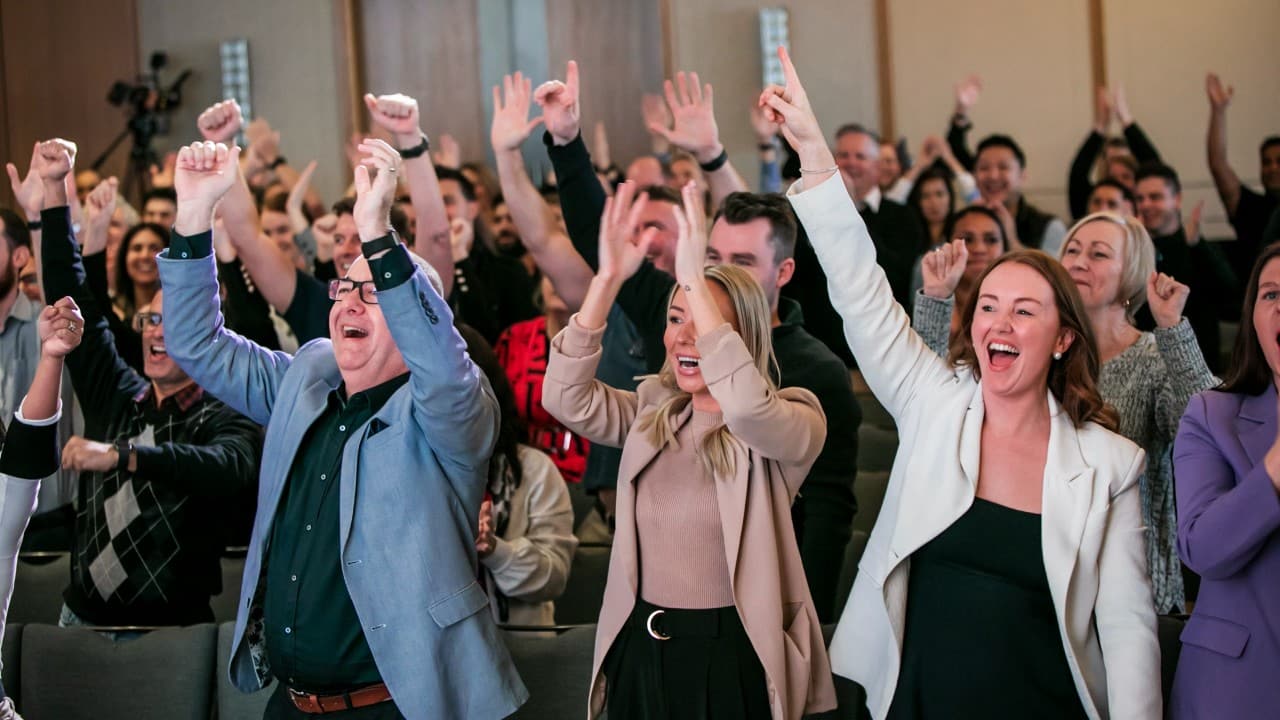
Teams often walk into one of our song-writing sessions feeling stretched, tired and highly resistant but they walk out looking and feeling noticeably lighter. Where they entered one by one, we see them leave in small excited groups, not quite ready to leave the upbeat, reassuring collective energy behind.
That difference isn’t about the activity itself. It’s about what the activity makes possible: people reconnecting with each other in a way that feels natural.
And when people feel at ease with each other, almost everything else they do together becomes easier.
Reconnection is now a business skill
Nothing is “wrong” with most teams — the environment just hasn’t supported the kind of connection they need to do their best work. Social instincts return quickly when teams are given the right conditions.
A well-designed team experience helps people get comfortable with each other again. It rebuilds confidence. It reminds them what good collaboration feels like. And it sends them back into the work with more energy, and a little more trust.
It’s a small shift with a big downstream effect — and right now, how many teams need exactly that?